

There’s a photograph I almost didn’t take.
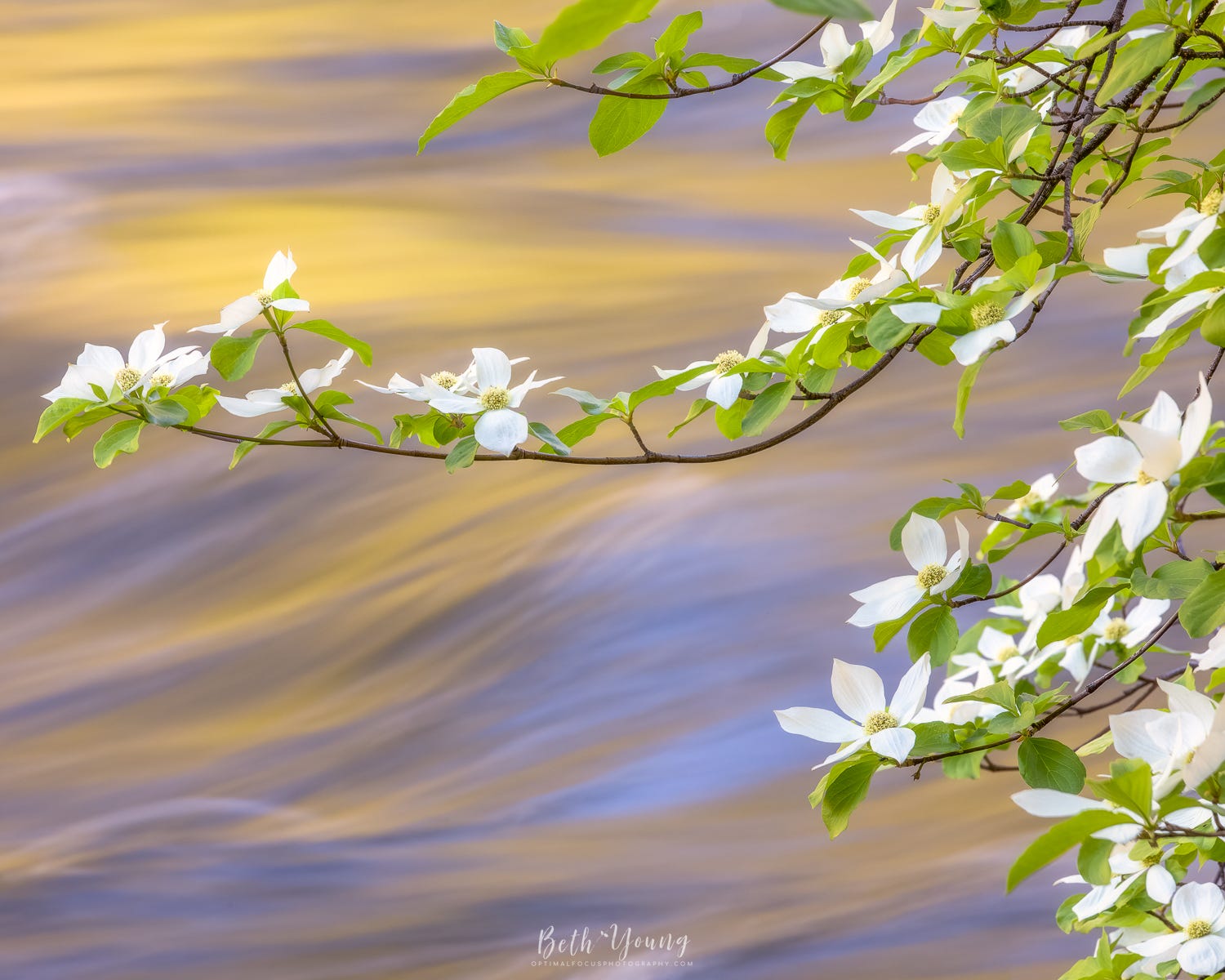
I was in Yosemite Valley, early morning, chasing the light on the granite peaks. I had my shot. The one I’d driven four hours for, the golden light casting a glow on the vertical face of El Capitan. And then I turned around, away from the “view,” and saw a single dogwood branch against the gorgeous gold and blue tones reflected in the Merced River. Just a branch. A few blossoms catching the first light of the day.
I almost kept walking. Instead I stopped, changed lenses, and spent twenty minutes with that branch.
That image has been licensed for healthcare installations several times. The dramatic landscape shot, the one I drove four hours for, has not.
When I started photographing intentionally for healthcare environments, something unexpected happened. It didn’t just change what ended up on hospital walls. It changed fundamentally how I see in the field.
I want to talk about that shift today, because if you’re a nature photographer who has ever thought about this market, or who simply wants to bring more intention to what you shoot, understanding how healthcare changes your eye might be the most useful thing I can share.
It starts with unlearning some of what we’ve been taught to value.
The Drama Problem
Nature photography culture has a drama problem.
Not a bad one. Drama is part of what draws us to landscape photography in the first place! The storm rolling in over the mountains. The sky on fire at sunset. The crashing wave. These are legitimate, beautiful, technically demanding images, and they deserve to exist.
But they don’t always belong on hospital walls. And once you understand why, you start to see the landscape differently.
As I wrote in my last post, the research on healing imagery is specific: patients under stress gravitate toward natural subjects that signal safety, abundance, and calm. Their nervous systems are already on high alert. The last thing they need is an image that activates more alertness, which is exactly what dramatic, high-contrast, stormy imagery does, regardless of how beautiful it is.
So when I’m in the field now, I’ve learned to ask a different question. Not just is this beautiful? but is this safe?
It sounds simple. It changes everything.
Learning to See the Quiet Shot
The images that work best in healthcare settings share a quality that’s harder to articulate than technical sharpness or compositional balance. I think of it as visual rest. The image gives the eye somewhere to land and stay. It doesn’t demand anything. It just… holds you.
Think about what that means practically in the field.
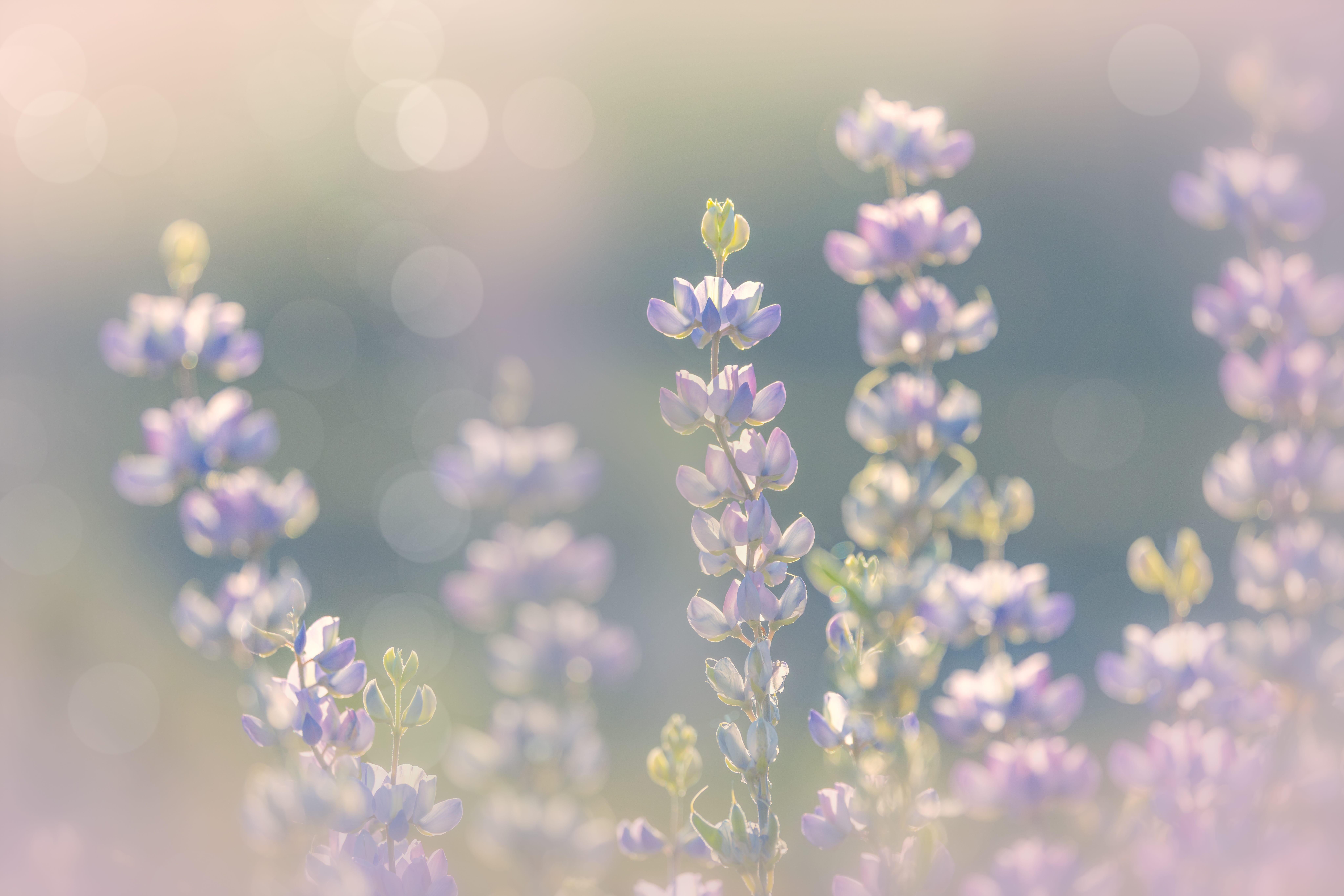
It means that when everyone else at the location is shooting the wide dramatic vista, you might find your most valuable healthcare image by turning around and looking at what’s behind you. The soft light on a patch of moss. The way a creek catches the sky between the rocks. A single flower nodding in the breeze at the edge of the meadow.
It means shooting in conditions that other photographers pack up for. Overcast days, the ones with that flat, even, shadowless light that landscape photographers tend to dismiss, are actually ideal for the kind of soft, enveloping imagery that works beautifully in clinical settings. The drama is gone. What remains is color, texture, and a quality of light that feels almost interior, almost safe.
It means slowing down. Staying longer in one place. Getting lower, getting closer, changing your focal length from the sweeping wide angle to the intimate telephoto. The healthcare shot is often the one hiding in plain sight while you’re setting up the “real” shot.
The Telephoto Advantage
If I had to name one piece of gear that changed my healthcare portfolio more than anything else, it would be my favorite telephoto lens (a Canon RF mount 100-500mm F4.5-7.1 L IS USM).
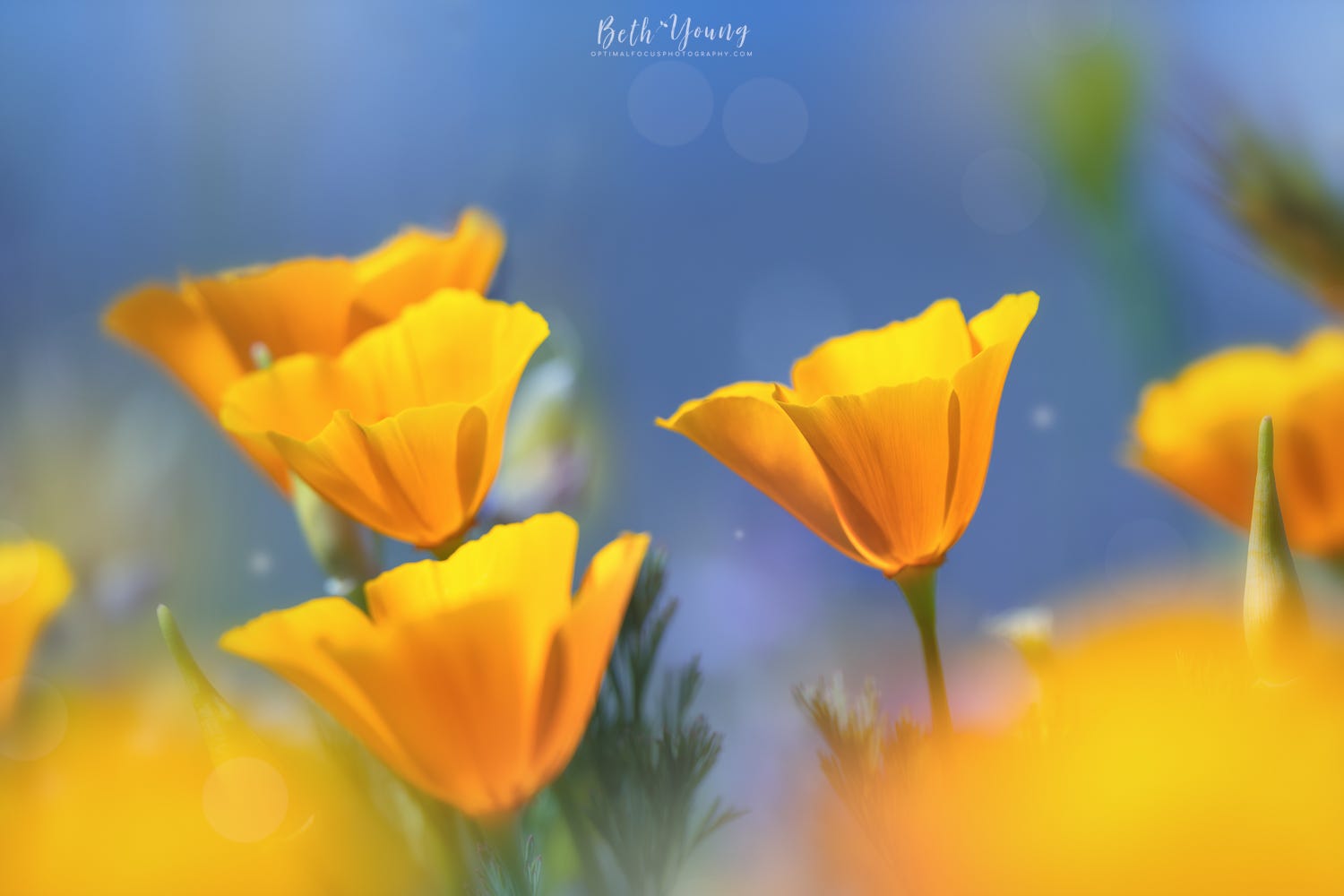
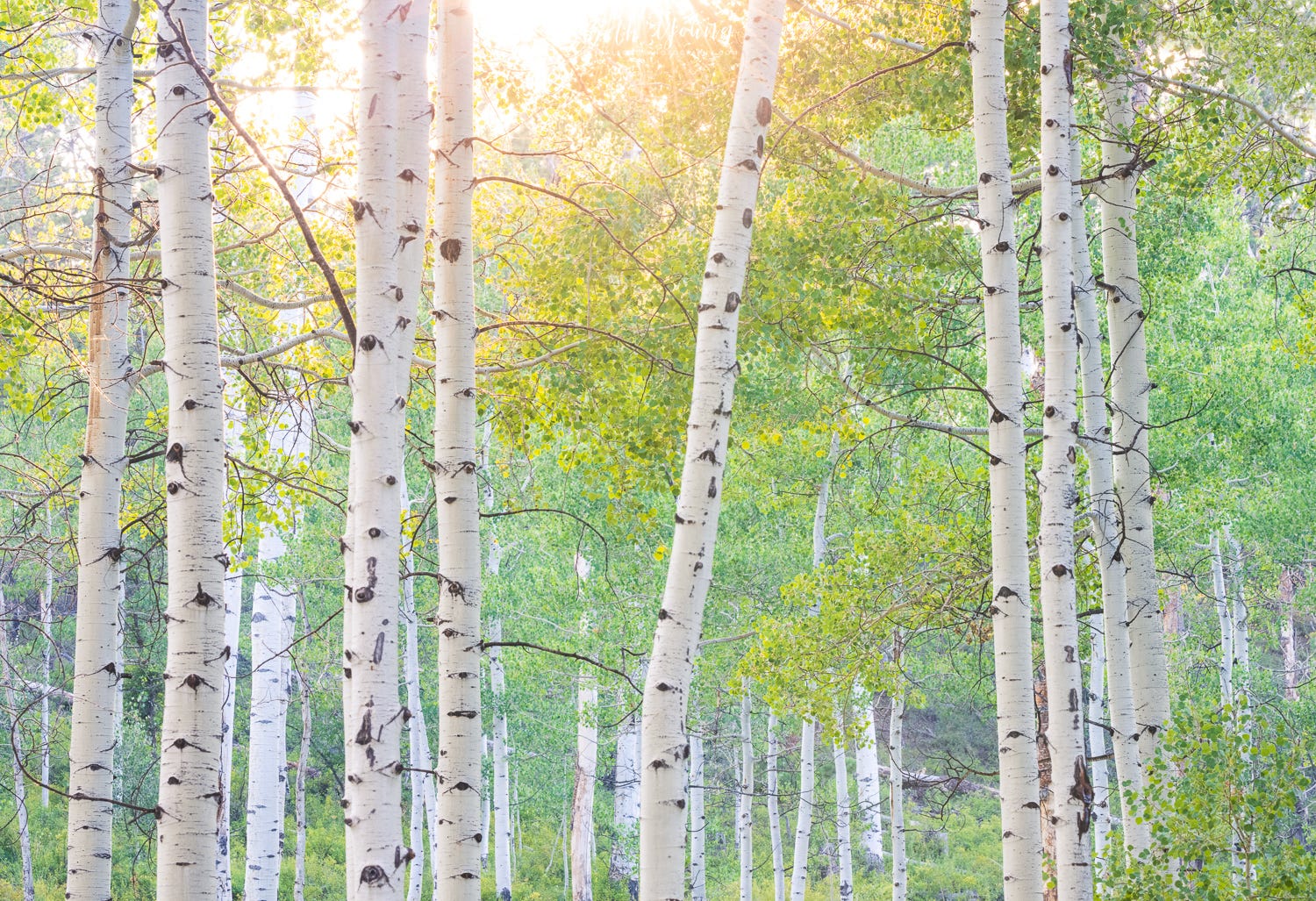
Telephoto compression does something remarkable for this kind of work. It collapses depth, layers elements, softens backgrounds into those lush, enveloping fields of color that feel almost like being held. A stand of aspens shot at 400mm becomes something completely different from the same stand shot at 24mm: more intimate, more abstract in the best sense, more focused on the essential quality of the subject rather than its relationship to the landscape around it.
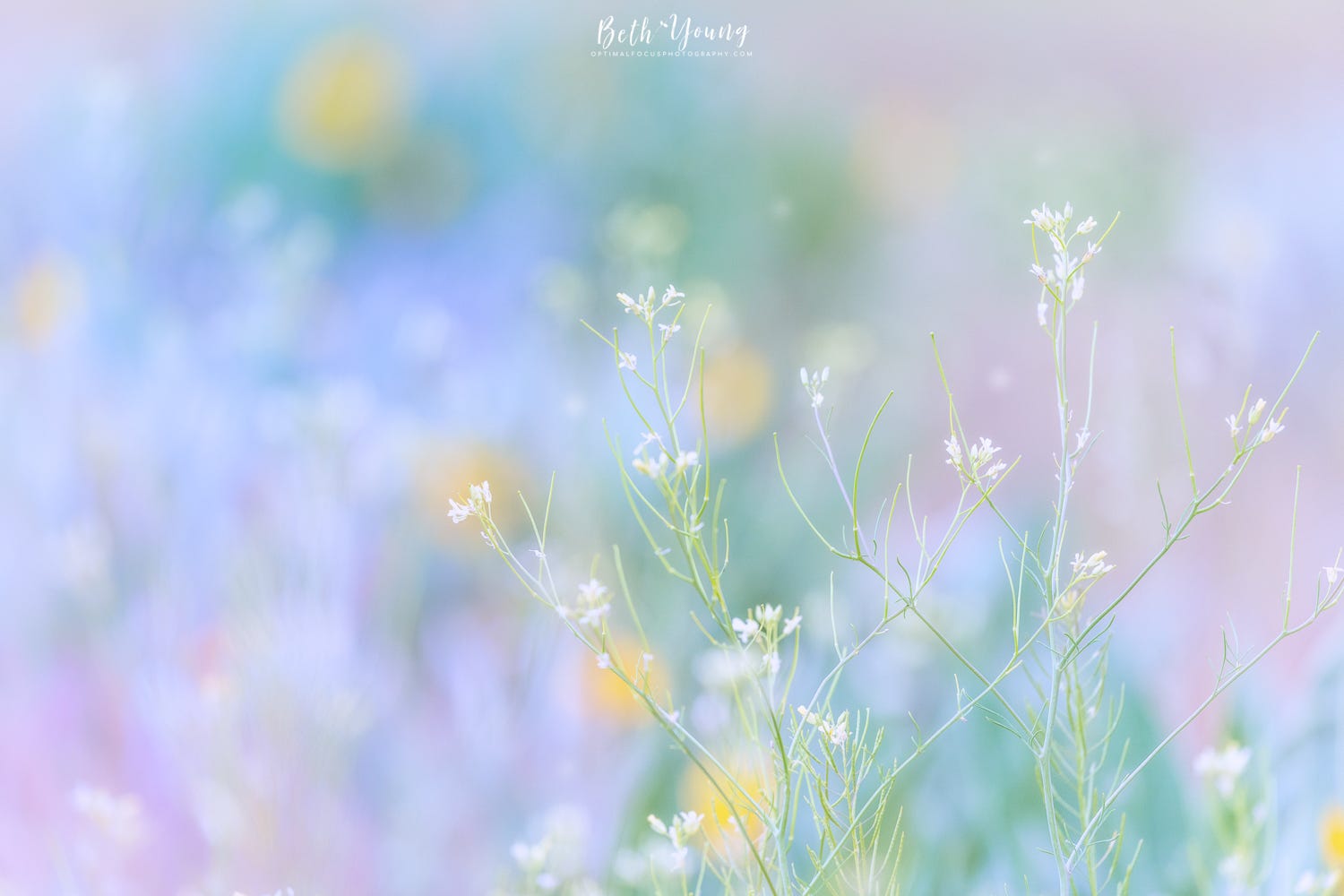
The images that come back to me most often in licensing inquiries, the ones that art consultants reach for again and again, are almost always telephoto shots. Compressed foliage. A single branch isolated against soft light. Flowers rendered in creamy bokeh with just enough detail to be legible. Water abstracted into smooth color through a long exposure.
None of these are the “hero shot” of a location. They’re the quiet shots. The ones that take patience and a willingness to work a scene beyond the obvious frame.
What to Look for When You’re Out In the Field
Here’s how this translates into practical field behavior. When I arrive at a location now, I run through a mental checklist that I’ve developed over years of shooting for this market. It’s not formal and it happens pretty automatically at this point, but breaking it down might be useful.
Find the calm water. Always. Even if it’s not what I came for. A still reflection, a gentle current, a misty lake at dawn: these are the highest-value subjects in healthcare art, consistently. If there’s water in the scene and I can find an angle where it reads as calm, I shoot it.
Look for the light through something. Light filtering through leaves, through tall grass, through a curtain of falling water. This quality of diffused, broken light has an almost universally calming effect. It’s soft. It has depth. It invites the eye in rather than confronting it.
Isolate rather than include. The instinct in landscape photography is often to include as much as possible: foreground interest, midground, background, sky. For healthcare, I often find myself doing the opposite: using a longer lens or a closer position to isolate a single element and let everything else fall away. One flower. One branch. One tree against a soft sky.
Shoot in the flat light. Don’t pack up when the clouds roll in. Some of my best healthcare images have been made on completely overcast days when the light was even and soft and the colors were saturated without being harsh. This is the light that makes green feel like it’s glowing from within.
Ask the safety question. Before I move on from a composition, I try to ask myself honestly: if I were lying in a hospital bed, or sitting in a treatment chair, would this image make me feel safer? More at ease? Would it give me somewhere to go mentally? If the answer is yes, I capture a shot. If the answer is no, or if it activates something anxious in me, I tend to move on.
The Unexpected Gift
Here’s something I didn’t anticipate when I started shooting with healthcare in mind: it made me a better photographer across the board.
The discipline of asking “what does this image feel like”? rather than just “what does this image look like”? opened something up in my seeing that I hadn’t accessed before. Shooting for healthcare forced me to slow down, to work scenes more thoroughly, to value the quiet and the intimate over the grand and the dramatic.
I started finding images I would have walked past. I started spending more time with individual subjects: a single oak tree, a particular stretch of creek, a field of grass in soft afternoon light, rather than always chasing the next iconic view. My portfolio got quieter, and in getting quieter, it got stronger.
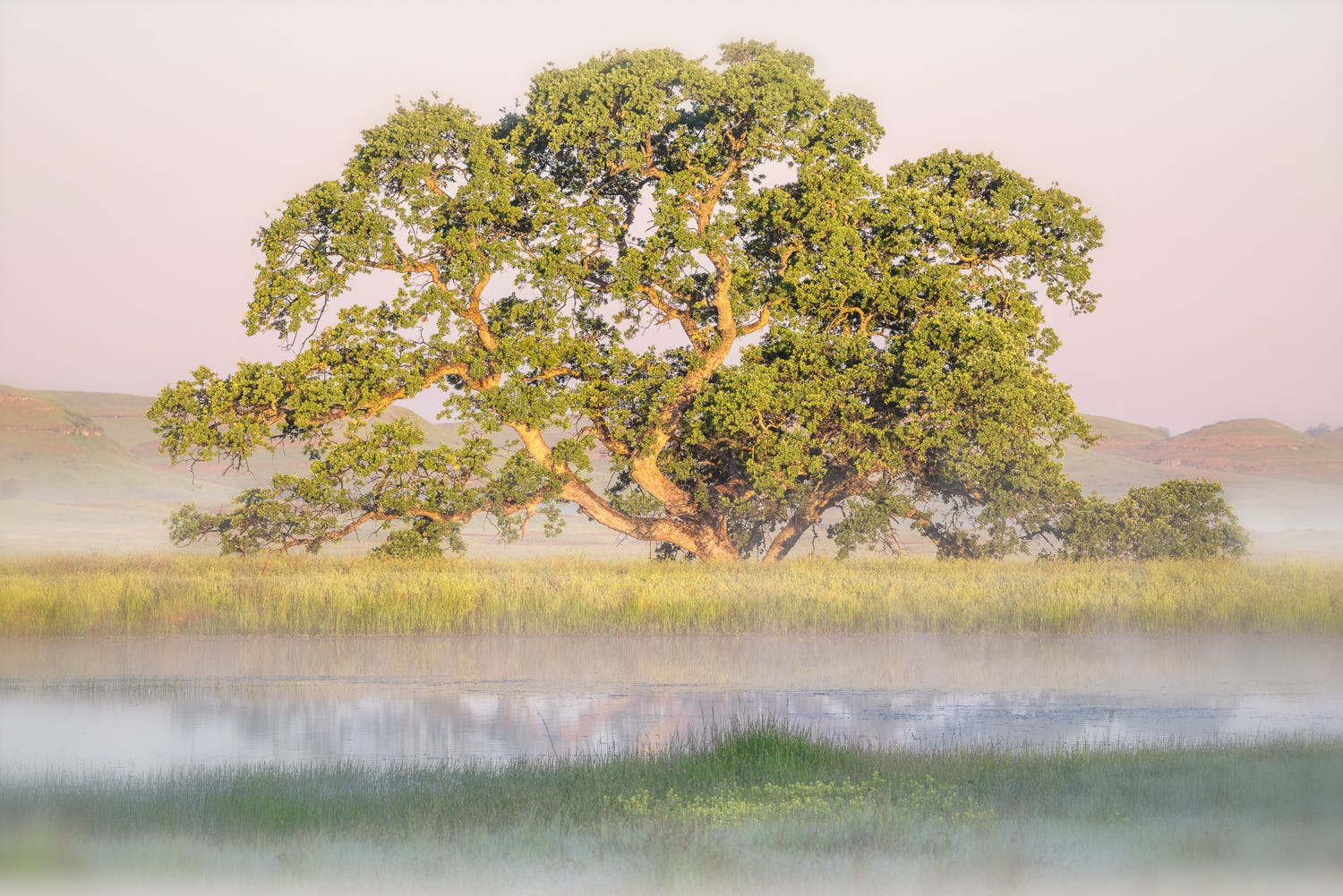
The shot they never tell you to take, the one that’s too simple, too still, too quiet for the drama-hungry landscape photography world, turns out to be the one that matters most. The one that, hung on a wall in a cancer center, might give someone somewhere to rest their eyes during the hardest hour of their day.
That’s worth twenty minutes with a branch.
Next up in The Healing Frame: “What Art Consultants Actually Want” — demystifying the buying chain for photographers trying to break into the healthcare market.
Beth Young is a Sacramento-based nature photographer and licensed architect specializing in healing imagery for healthcare environments. Find her portfolio at optimalfocusphotography.com
Beautiful images, and a wonderfully written backstory. I’m thankful you chose to share both with your audience. 😎
Excellent post, Beth. You are so wonderful at this style of photography, and I appreciate your sharing of your insights here.