

Most of us who photograph nature do it because something compels us to. The light on the water at dawn. The way a field of wildflowers moves in the breeze. The stillness of a forest after rain. We don’t always need a reason beyond the feeling itself.
But what if I told you that feeling has a name, a mechanism, and decades of peer-reviewed research behind it? And that the images you’re already making might be doing something far more significant than decorating a wall?
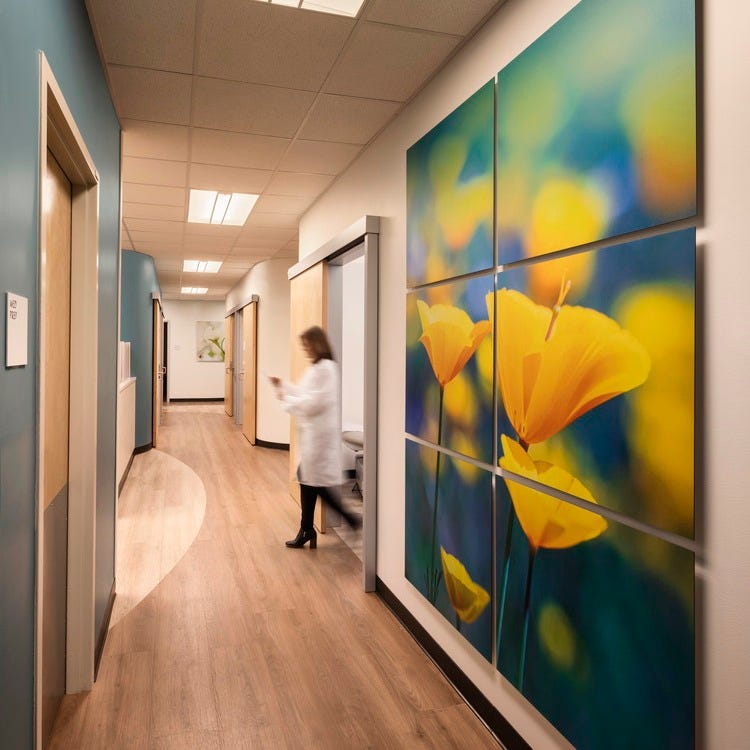
When I was practicing as a healthcare architect, I encountered a body of research that genuinely changed how I thought about the built environment. It’s called Evidence-Based Design (EBD for short) and it’s exactly what it sounds like: applying documented research to the design of healthcare spaces in order to improve patient outcomes. Things like room layout, lighting, acoustics, wayfinding. And yes, art.
As an EDAC-certified architect, I studied this research professionally. But it wasn’t until I became a patient myself that I understood it viscerally. Lying in a treatment chair for hours at a time, I wasn’t thinking about peer-reviewed studies. I was just grateful for the image on the wall in front of me, and aware, in a way I’d never been before, of exactly what it was doing for me in that moment.
That’s the thing about good science. When it’s right, you feel it before you can explain it.
The Research That Changed Everything
In 2003, researchers Roger Ulrich and Laura Gilpin published a landmark study on the role of art in healthcare environments. Ulrich, an environmental psychologist, had already made waves in 1984 with a study showing that patients recovering from surgery who had a window view of trees had shorter hospital stays, needed less pain medication, and had better outcomes than those whose windows faced a brick wall. A window. Trees. That was it.
The 2003 study went further, identifying specific categories of nature imagery that promote what researchers call “restoration” — the measurable reduction of stress, anxiety, and physiological arousal that happens when we encounter certain natural subjects.
The findings weren’t subtle. Nature imagery in healthcare settings has been shown to:
• Reduce patient stress, anxiety, and the perception of pain
• Shorten hospital stays and reduce the need for pain medication
• Improve patient satisfaction scores which are increasingly tied to hospital reimbursement
• Reduce work-related stress and burnout in healthcare staff
• Create positive distraction, blocking worrisome thoughts and allowing the mind to rest
This isn’t interior decorating. This is clinical outcome data. And it has profound implications for anyone who makes, selects, or places imagery in healthcare environments.
Why Nature? The Evolutionary Case
Before we get into what works and what doesn’t, it’s worth understanding why nature imagery has this effect at all, because the answer goes much deeper than just aesthetics.
The leading theory is rooted in evolutionary biology. As human beings, we are hardwired to respond to certain natural environments with a sense of safety and calm. Our ancestors survived by reading landscapes: where is the water? Where can I find shelter? Is this an open space where I can see predators coming, or am I vulnerable here?
The natural subjects that signaled safety, sustenance, and survival to our ancestors are the same ones that calm our nervous systems today. We haven’t evolved past that response, we’ve just built walls around it. Put a person in a sterile clinical environment, strip away their agency, subject them to pain and uncertainty and fear, and their nervous system will reach for whatever signals safety it can find. A window. A plant. A photograph of a meadow at golden hour.
This is what biophilia means: literally, “love of life.” The term, popularized by biologist E.O. Wilson, describes our innate tendency to seek connection with the natural world. In healthcare design, biophilia isn’t a trend or an aesthetic preference. It’s a framework for understanding why certain spaces help people heal and others don’t.
What Actually Works: The Evidence-Based Subjects
So what does the research tell us? This is where it gets specific and where the implications for photographers become really interesting.
Ulrich and Gilpin identified several categories of nature imagery that consistently promote restoration and healing. These aren’t arbitrary. Each one connects back to the evolutionary framework: subjects that would have signaled safety, abundance, and survival to our ancestors.
Calm water. Lakes, rivers, gentle water scenes, misty reflections. Water meant survival. Calm water meant safety. This category consistently scores highest in stress-reduction research which is why you’ll find water imagery in virtually every well-designed healthcare art program.

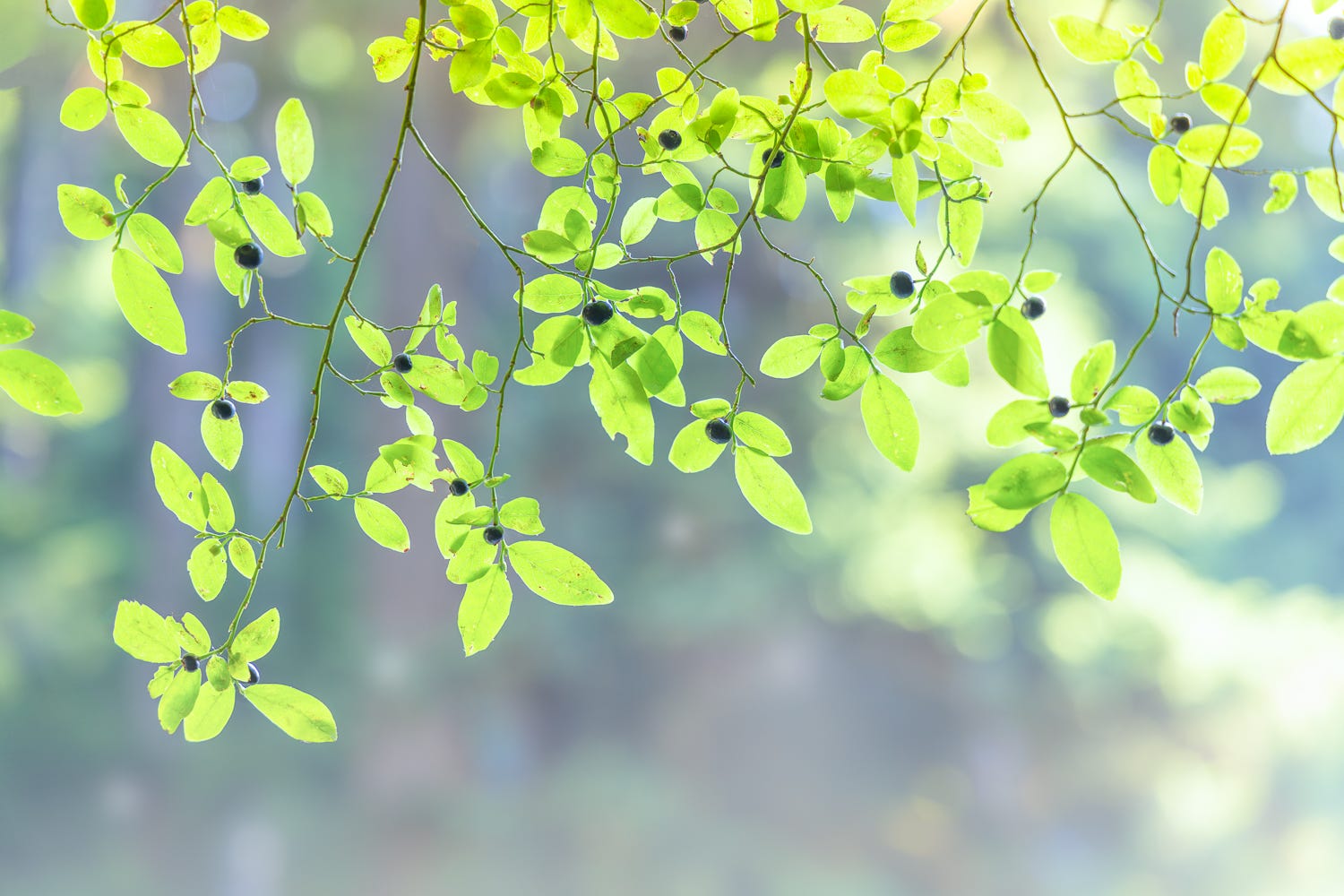
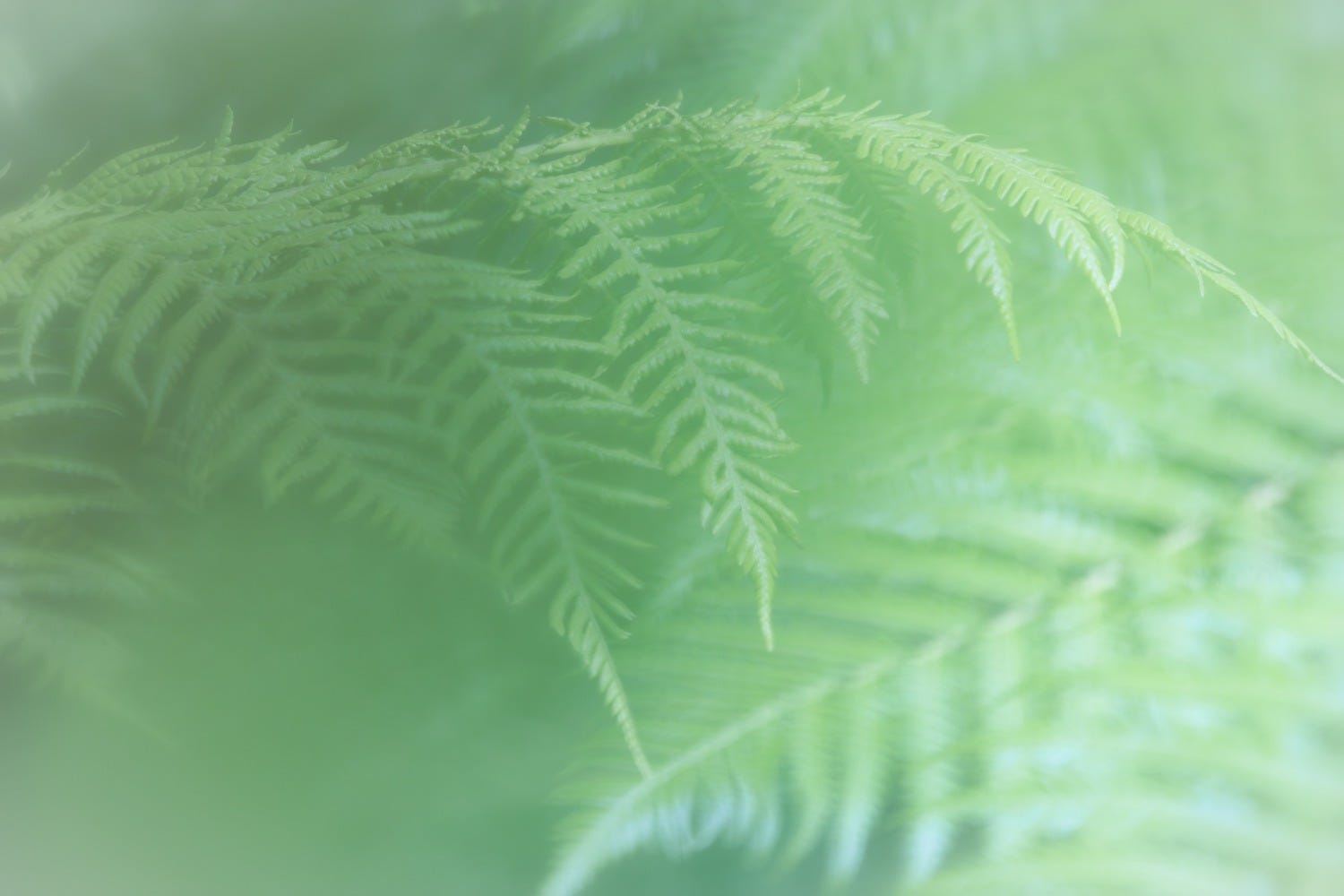
Verdant foliage. Lush, green, living plant life. Green signals abundance, growth, and a habitable environment. Soft-focus foliage, in particular, has a remarkably calming effect. There’s something about that quality of light filtering through leaves that seems to speak directly to the nervous system.
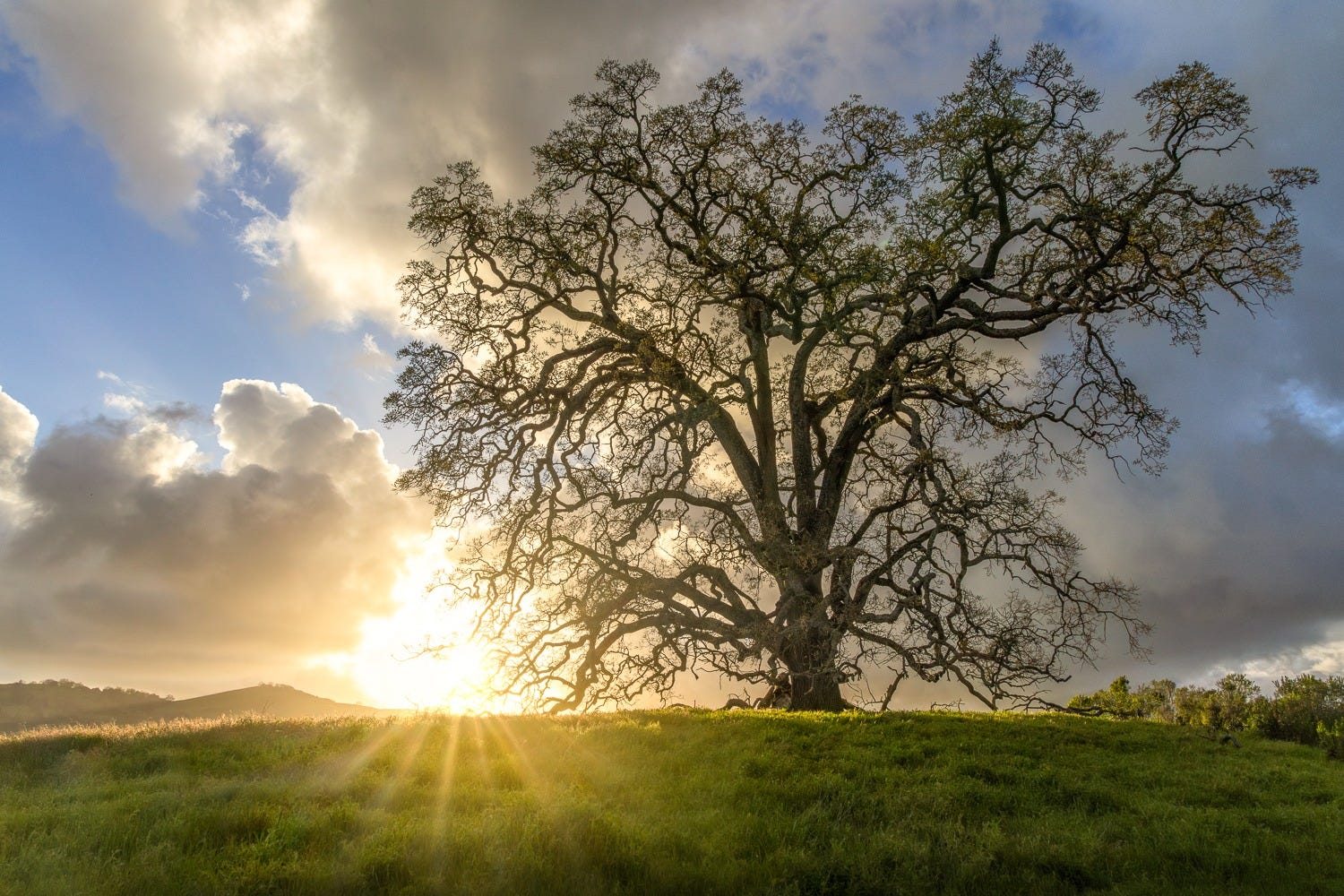
Low hills, scattered foreground trees, and broad tree canopies. The classic savanna landscape: open enough to see threats, sheltered enough to feel protected. Think of a lone oak on a hillside, or sunlight breaking through a forest canopy. These compositions tap into something ancient.
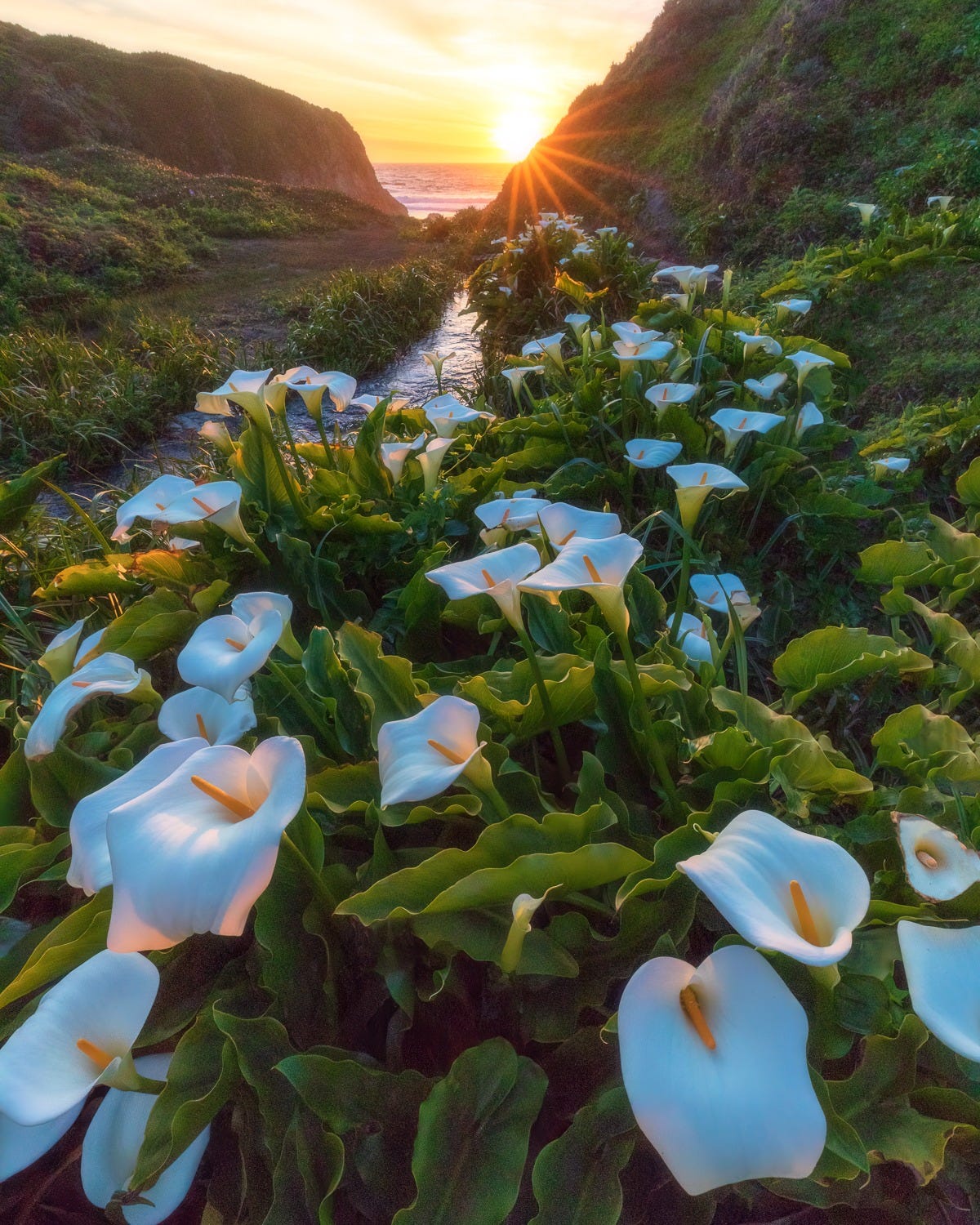
Flowery landscapes and healthy flowers. Flowers historically signaled the presence of fruit, food, and a fertile environment. Bright, healthy blooms, especially in warm colors like yellow, orange, and soft pink, consistently evoke hope and vitality. Notably, the research specifies healthy flowers. Wilting or dying blooms can have the opposite effect.
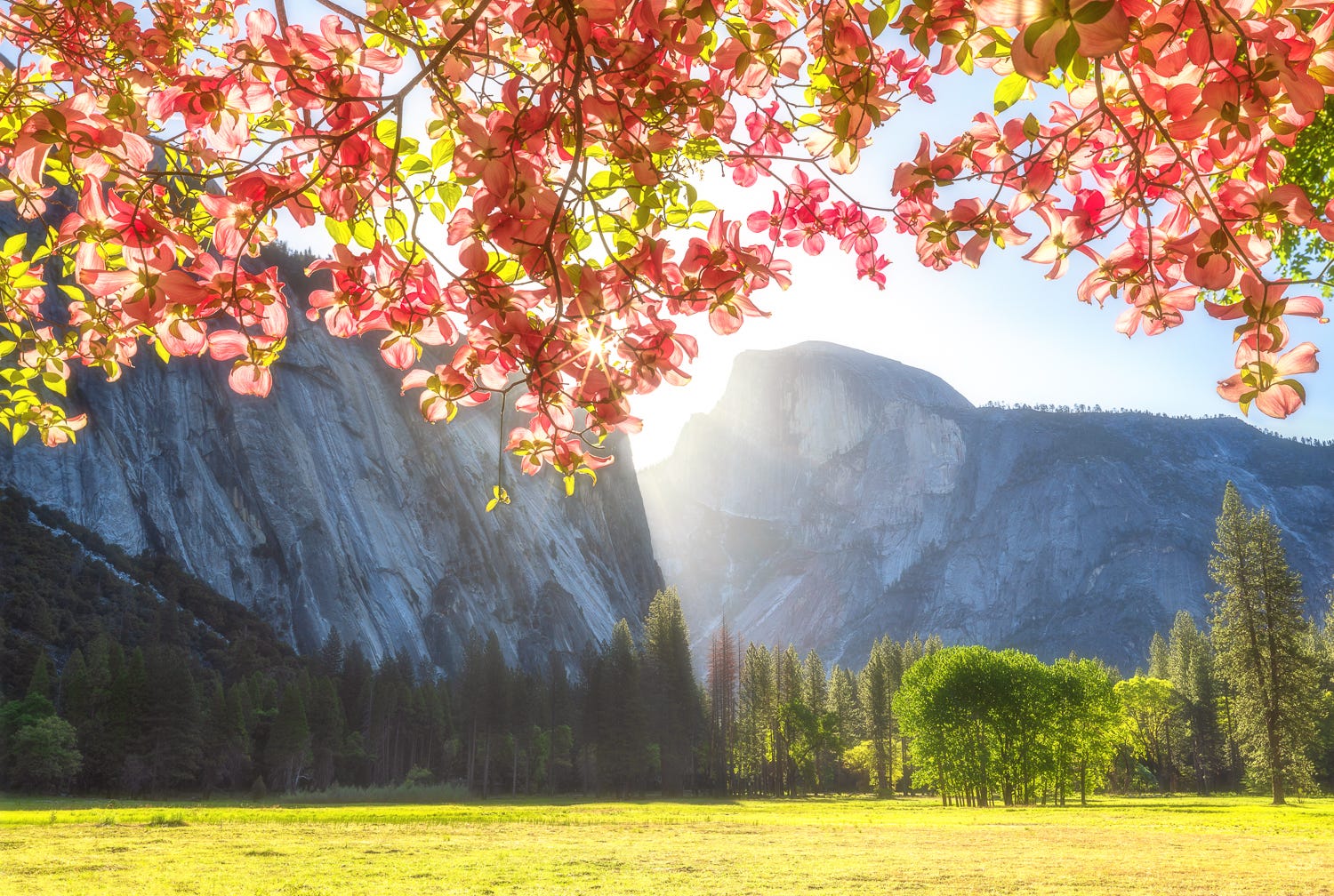
Spatially open landscapes. Wide, unobstructed views such as open meadows and broad vistas. The ability to see far in all directions was a fundamental survival advantage. Images that give the eye room to travel create a sense of freedom that’s particularly powerful for patients who feel physically confined.
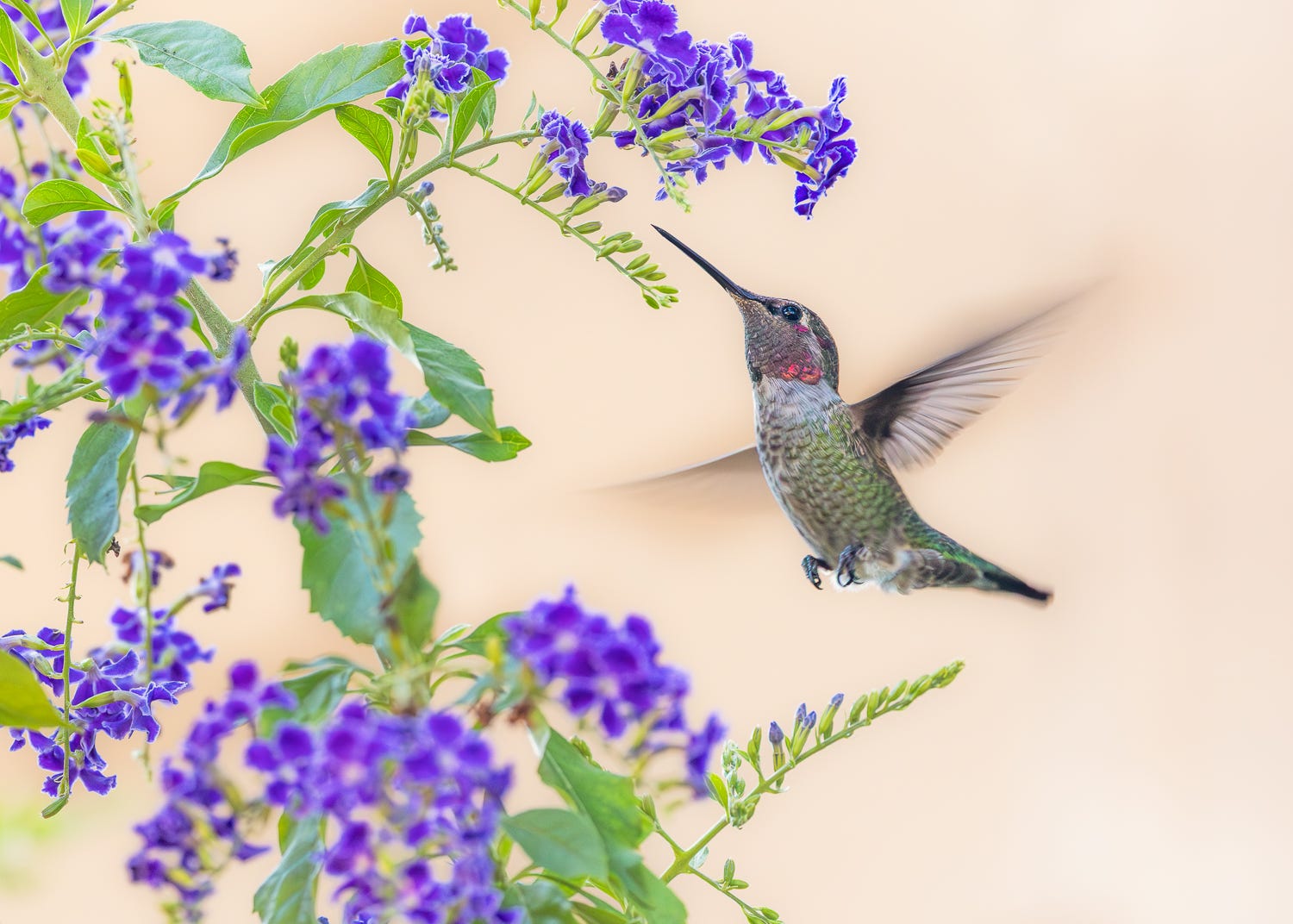
Un-threatening birds, wildlife, and insects. Hummingbirds, butterflies, deer in a meadow. Non-predatory animals signal that an environment is safe. They also bring a sense of life and movement to a static image in a way that’s deeply engaging without being stimulating.
What Doesn’t Work And Why It Matters
This is the part that surprises most people, including many photographers who are new to this space.
Not all nature imagery is therapeutic. Some of it is actively counterproductive in clinical settings, regardless of how beautiful or technically accomplished it might be. The research is clear on this, and it’s worth understanding before you start thinking about your own portfolio in this context.
Abstract imagery — even beautiful, nature-inspired abstraction can sometimes increase anxiety in stressed patients rather than reduce it. When we’re under stress, our brains want clarity and legibility. Ambiguous imagery requires cognitive work to interpret, and that cognitive work competes with the restorative process.
Stormy, dramatic, or threatening landscapes — dark skies, turbulent water such as crashing waves, lightning, barren winter scenes activate rather than calm the stress response. What reads as dynamic and exciting to a healthy viewer in a gallery can feel ominous and unsettling to a patient in pain.
Close-up predatory animals or threatening wildlife. Even a beautiful image of a hawk or a wolf can trigger a threat response in someone whose nervous system is already on high alert.
Overly saturated or artificially manipulated imagery. Heavy post-processing, surreal colors, or heavily filtered images can feel disorienting in clinical settings. The research favors imagery that feels real, grounded, and recognizable.
Urban scenes, even beautiful ones. Cities and architecture, however stunning, don’t always carry the same restorative signal as nature. There are exceptions, particularly when urban imagery is paired with natural elements or represents a meaningful local connection that provides a sense of place, but as a general rule, nature consistently outperforms urban in clinical settings.
What This Means for Your Photography
If you’re a nature photographer reading this, I want to offer something that I wish someone had told me earlier in my career: the images you make with care, with patience, with genuine attention to light and composition and the quiet moments that most people rush past — those images have value beyond the print sale.
In the posts ahead, I’ll go deeper into how to think about your existing portfolio through this lens, what to look for when you’re out in the field shooting with healthcare environments in mind, and how the market for this kind of work actually functions. But for now, I want to leave you with this: the next time you’re out before dawn, waiting for the light to hit the water just right, know that what you’re doing matters in ways that extend far beyond the image itself.
That’s beauty with a purpose.
This post combines two things I truly love Beth: Art + Science. The nerd in me is very happy! Keep up the great work!